

TRUEPIC BLOG
Recent news points to authenticity at capture as a critical layer for enterprises
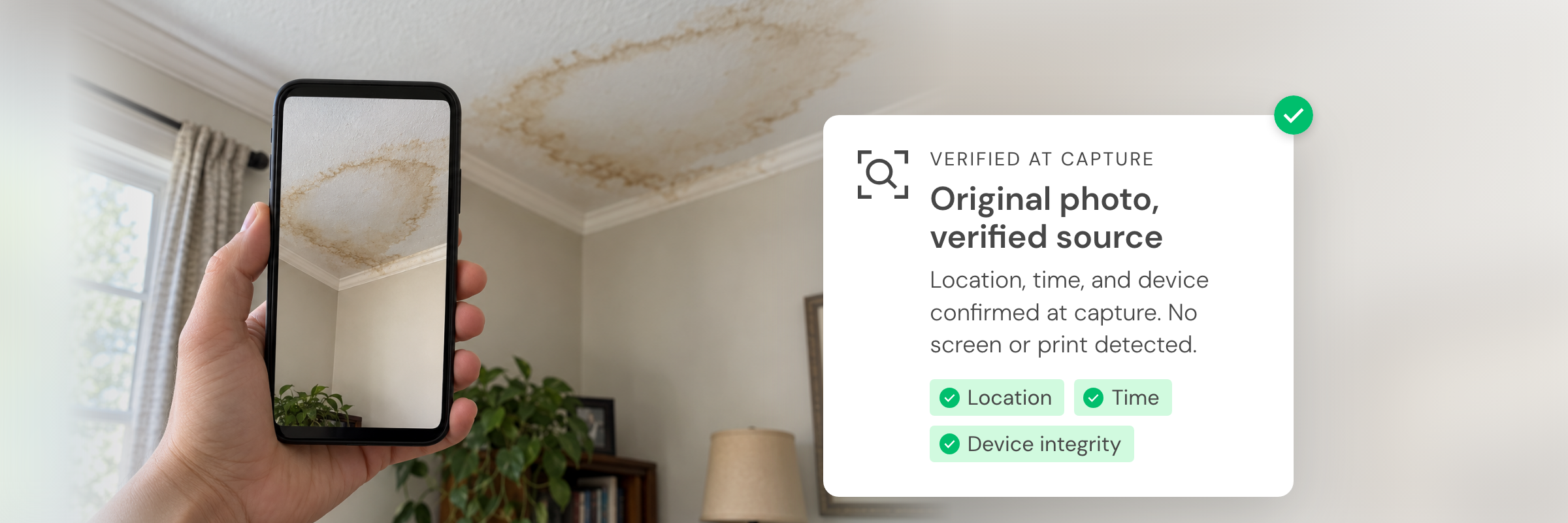
Three recent developments across disparate areas pointed to the same conclusion: telling authentic digital content from fabrication is getting harder. A federal evidence committee, risk experts, and university research teams all highlighted this growing challenge. These statements should be seen as a whole and also as a flag for enterprises considering how they decipher authenticity from synthesis today.
AI companies warn detection won't keep up
On October 15, OpenAI and Meta addressed the federal Advisory Committee on Evidence Rules, the body that shapes what evidence federal courts accept. OpenAI's policy counsel, Shira Anderson, said she does not expect a scientific way to detect AI-generated images going forward. Meta's Devin Norder said media from recent models can be indistinguishable from authentic material.
These statements are significant because these are among the organizations that have the most data, the most compute, and the deepest knowledge of how generated images are made. If anyone could win a detection arms race, it would be them, and they are telling the courts not to count on one. Legal experts and judges are beginning to prepare, including by considering possible changes to the Federal Rules of Evidence and new best practices.
Risk leaders rank AI-enabled fraud as their top claims concern
At the Risk Management Society's annual conference in Philadelphia, CorVel surveyed attendees about what is most likely to increase claim severity over the next three to five years. AI-enabled fraud and data authenticity ranked first, selected by 32% of respondents, ahead of social inflation, which includes larger verdicts and prolonged litigation, at 25%.
The specific risks respondents pointed to were fraudulent documentation, manipulated information, and data authenticity. The result shows risk professionals placing the integrity of the evidence they receive above one of the industry's most discussed cost drivers. A well-governed claims process that receives manipulated photos or documents is still making decisions on manipulated photos or documents.
CorVel's recommendation was layered verification, continuous monitoring, strong governance, and ongoing education for claims teams. As images and data flow into claims workflows and the AI tools that review them, knowing what is authentic before a decision is made becomes a core requirement.
Fraud and abuse are different problems
In retail, researchers at Griffith University and the University of Western Australia, in a study commissioned by ECR Retail Loss, separated return misconduct into two categories. Opportunistic abuse, such as wearing an item once and sending it back, is best handled through clear policy. Deliberate fraud is different. It involves planned deception, such as submitting a fake receipt, and the researchers found it is chiefly a verification problem, not a policy one.
About one in six surveyed consumers admitted to some form of return misconduct in the past year. The distinction matters because generative AI makes deliberate fraud easier. A fake receipt, a doctored photo of a damaged product, or a synthetic image of an item that was never bought can now be produced in minutes. Stricter return policies do little against someone willing to fabricate evidence. They mostly add friction for honest customers. What stops deliberate fraud is the ability to confirm that the evidence is real. The researchers highlight the importance of enhancing transaction verification to quickly suss out fraud.
What the three have in common
Developers of some of the most advanced AI systems now acknowledge that detection cannot be relied on as a primary defense. At the same time, courts, risk professionals, and industries are tracking and beginning to openly discuss the operational and financial impact of fabricated content today. Detecting deceptive content after the fact is a bet that someone or something downstream can still tell authentic from fabricated, and the odds on that bet are getting worse.
There is no silver bullet for online fraud and deception. A layered approach is best practice, and one critical layer is authentication at the moment of capture. When authenticity is established at the source, the question reviewers or reviewing systems ask changes. Instead of "is this fake?", which may soon be unanswerable, they can ask "where did this come from?", which can be answered with a cryptographically-sealed piece of content with verified data.
Enterprises that bring digital content into their workflows can make sure the images and data they receive are authentic, which streamlines every decision that follows. This is already happening with insurance, consumer products, lending, business verification, and many other industries Truepic serves.
Subscribe to Truepic updates
Stay up to date with our latest resources and articles.