

TRUEPIC BLOG
How image authenticity is accelerating returns, warranty, and recalls

Fast moving warranty, return, and recall programs often face a challenge: someone or something has to look at a photo and decide whether to trust it before the process can move forward. This is a growing issue given the proliferation of AI and synthetic media generation and manipulation.
As merchants and manufacturers digitize these programs, we keep getting the same question: how do you know what's actually coming in is real? Policy abuse is now the fraud risk merchants cite most often, named by 41% of merchants, with 61% reporting an increase over the past year and 20% seeing spikes of 25% or more, according to MRC's 2026 Global eCommerce and Fraud Report.
Truepic authenticates images, videos, and data the moment they're captured and before they hit a warranty, claim, or recall workflow. This allows businesses to act on what customers submit instantly, and Truepic’s image and data authenticity checks immediately flag suspicious submissions for a better look.
Truepic’s partnership with OtterBox shows what addressing this challenge looks like at scale. In under four months, Truepic authenticated images on more than 100,000 OtterBox warranty claims.
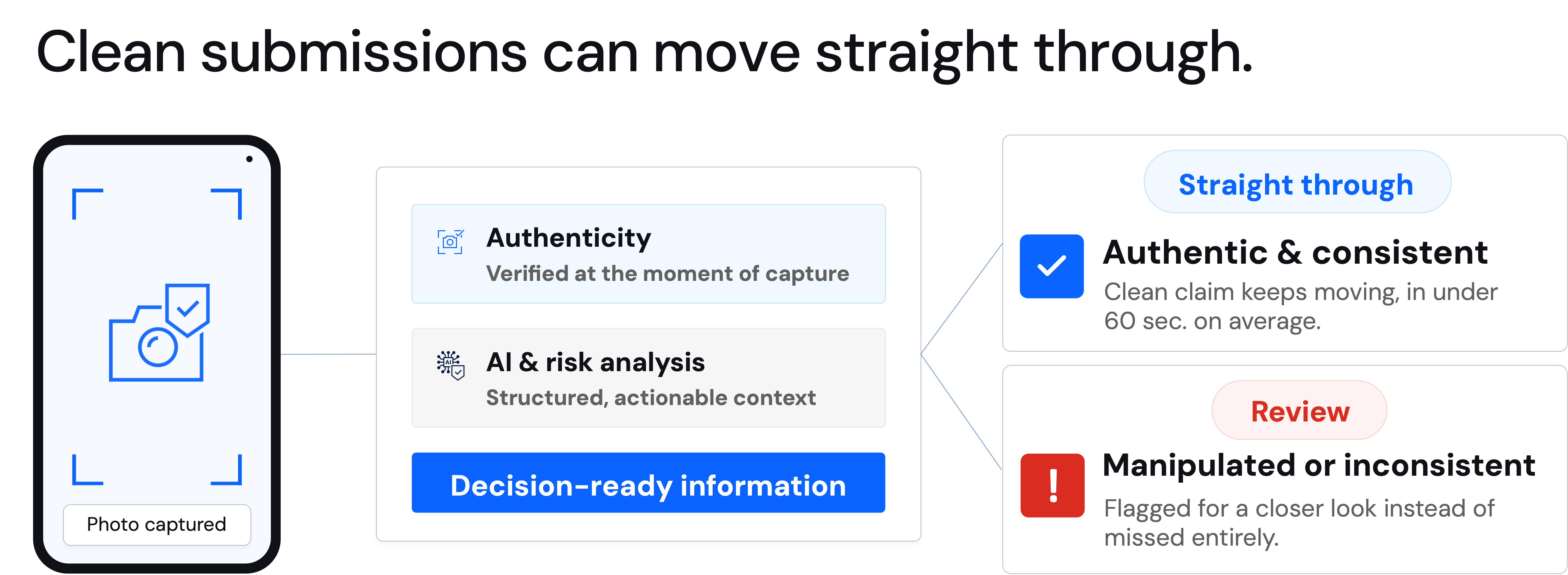
Customers apply for a warranty claim, receive a secure Truepic-powered camera in two seconds, capture an image of the product, and submit. On average, this entire process occurred in under 60 seconds, with no friction. Behind that speed sit over 50 image and data checks that turn each submission into structured, decision-ready information, verified at the moment of capture and sealed before it ever reaches OtterBox's claims workflow.
Clean claims can move faster. Anything that looks manipulated or inconsistent gets flagged for review instead of missed entirely.
This style of visual risk is not just a run of the mill fraud issue for merchants, it is something that the government and lawmakers are growing concerned about. In April, the Consumer Product Safety Commission (CPSC) opened a formal request for information on recall fraud.
The RFI’s first inquiry pertained to the submission of “manipulated, forged, or synthetically created visuals, … that falsely claims an item was destroyed or meets the requirements for redemption programs.” In our own comments to the RFI, we highlighted how AI-enabled visual deception is becoming a growing driver of that fraud, and recommended authenticated, provenance-sealed inputs as a best practice for recall programs going forward.
We see these challenges as adjacent and threats to one consumer-facing process, which will likely touch on others. Fraud rarely stops at one company or one claim type. For example, in our own analysis of sample size of recall claims using Truepic, a single device tied to more than 400 separate return scams across one program. This one device appeared part of a coordinated ring operating across multiple US cities and states.
In this sample, Truepic identified over 2,000 fraudulent claims tied to 8 such rings, avoiding an estimated $1M in losses in the sample size alone. It is just one anecdote, highlighting the growing need to authenticate inputs in high-scale, fast moving consumer-facing warranty, recall, and return processes.
This works with how customers already do business and makes the legitimate claim easier to process. The business and the honest consumer both come out ahead. Legitimate returns, warranty claims, and recalls move faster the moment evidence arrives, and visual fraud and AI-fueled deception get caught before they enter the workflow.
Ready to see what authenticated claims could do for your program? Request a demo.
Subscribe to Truepic updates
Stay up to date with our latest resources and articles.